

Trees are paying for spring flower spree with fall fungus
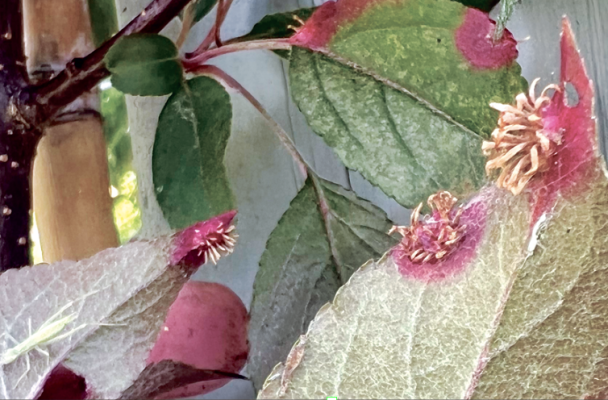
Cedar apple rust galls on crabapple leaves.
If you have a crabapple or serviceberry tree, you might be getting a little concerned about them. There’s a good chance they look pretty bad right about now.
Even if you don’t grow one of these trees, you may have noticed the state of them as you drive around Ozaukee County and beyond. After a spectacular spring flower show, many of these trees are looking positively anemic right now. Many have lost a lot of leaves, and what leaves are left are spotted, possibly shriveled and generally sad.
And although I don’t profess to be a plant disease expert, I suspect that both that amazing flower show and the poor state of them now was caused by the same thing — rain.
Although the near record-setting spring rain we had now seems like a distant memory, it gave plants an incredible jump on the season. Plants responded by putting on a lot of growth, but also by flowering prolifically and for an extended period of time. Crabapples became clouds of gorgeous color and serviceberry trees looked lovely at least until rain hit them.
But all of that lovely moisture that seemed like a boon also created the perfect condition for fungal diseases.
Various kinds of rust (the genus Pucciniaceae has many variations) can attack these trees as well as hawthornes. Crabapple, serviceberry, apple and hawthorne trees are all part of the large Rosaceae family of plants, so all are targets for rust fungi. But in the case of the rust that affects many of our trees, it takes two to tango, and the host partner is often eastern red cedar (Juniperus virginiana). Both plants must be grown within about a mile of each other for the fungus to thrive.
It starts on cedars as fascinating-looking orange balls called teliohorns, then the spores take to the air and land on crabapples and other trees. Galls that look like tiny blotches form on the leaves and fruit of these trees.
Tree leaves get blotchy and disfigured, making them look terrible, and in some cases the leaves drop.
Cedar-apple rust is not the only disease that can cause leaf distortion and defoliation. Apple scab is another fungal disease that has similar symptoms in apples and crabapples.
The good news is that in most cases these fungal diseases won’t kill a tree, however repeated infections over several years can weaken a tree, making it susceptible to other problems.
Fungicide applied in spring can help protect trees.
Rust and scab resistant varieties are available, but even these have succumbed to rust in my garden this year. Sometimes that’s just how gardening goes. There’s always next year and the memory of those beautiful spring flowers to make up for a few sad looking trees.
Category:
Feedback:
Click Here to Send a Letter to the EditorOzaukee Press
Wisconsin’s largest paid circulation community weekly newspaper. Serving Port Washington, Saukville, Grafton, Fredonia, Belgium, as well as Ozaukee County government. Locally owned and printed in Port Washington, Wisconsin.
125 E. Main St.
Port Washington, WI 53074
(262) 284-3494
CONNECT


User login
125 E. Main St | Port Washington, WI 53074
© 2026 Ozaukee Press. All rights reserved.
